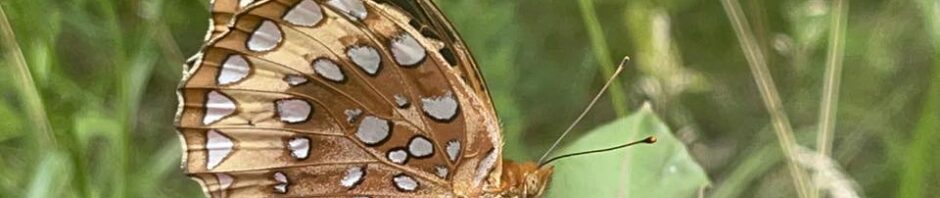
It’s the Great Spangled Fritillary Who Actually Helps the Plant
In an earlier post on PubWages, “The Monarch Butterfly and the Thistle Flower”, I shared how I finally got good photos of a Monarch — but not on milkweed. It was on thistle instead. Meanwhile, I saw plenty of Great Spangled Fritillaries on the milkweed plants. That observation planted the seed for today’s deeper look at this relationship.
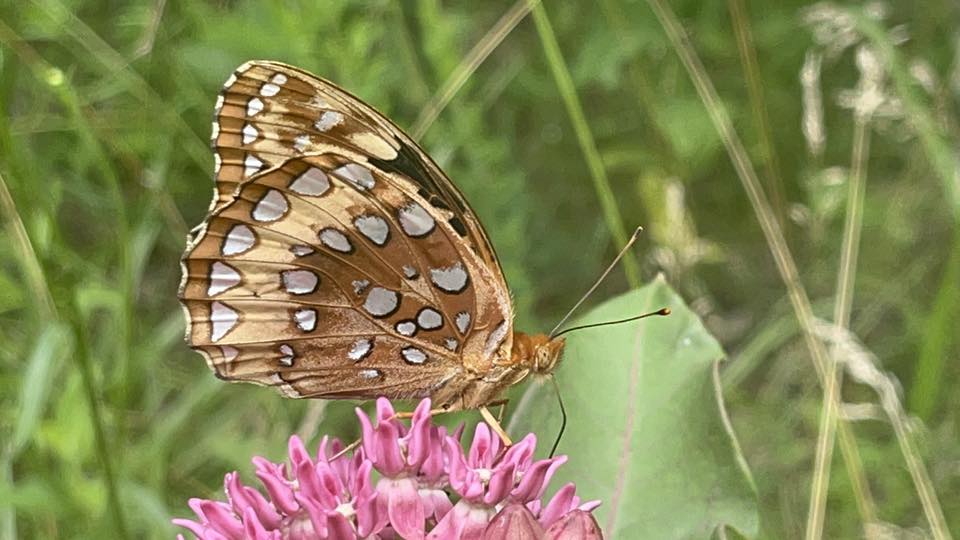
This June, my purple milkweed flower blossomed just according to plan. And as soon as it did, it was covered in great spangled fritillaries. Monarch butterflies, on the other hand, were nowhere to be seen.
This is no surprise, because for the Monarchs in my region, it’s not the season for drinking nectar. Instead, it is the time for caterpillars to munch on milkweed.
Monarch Caterpillars: The Leaf-Eating Specialists
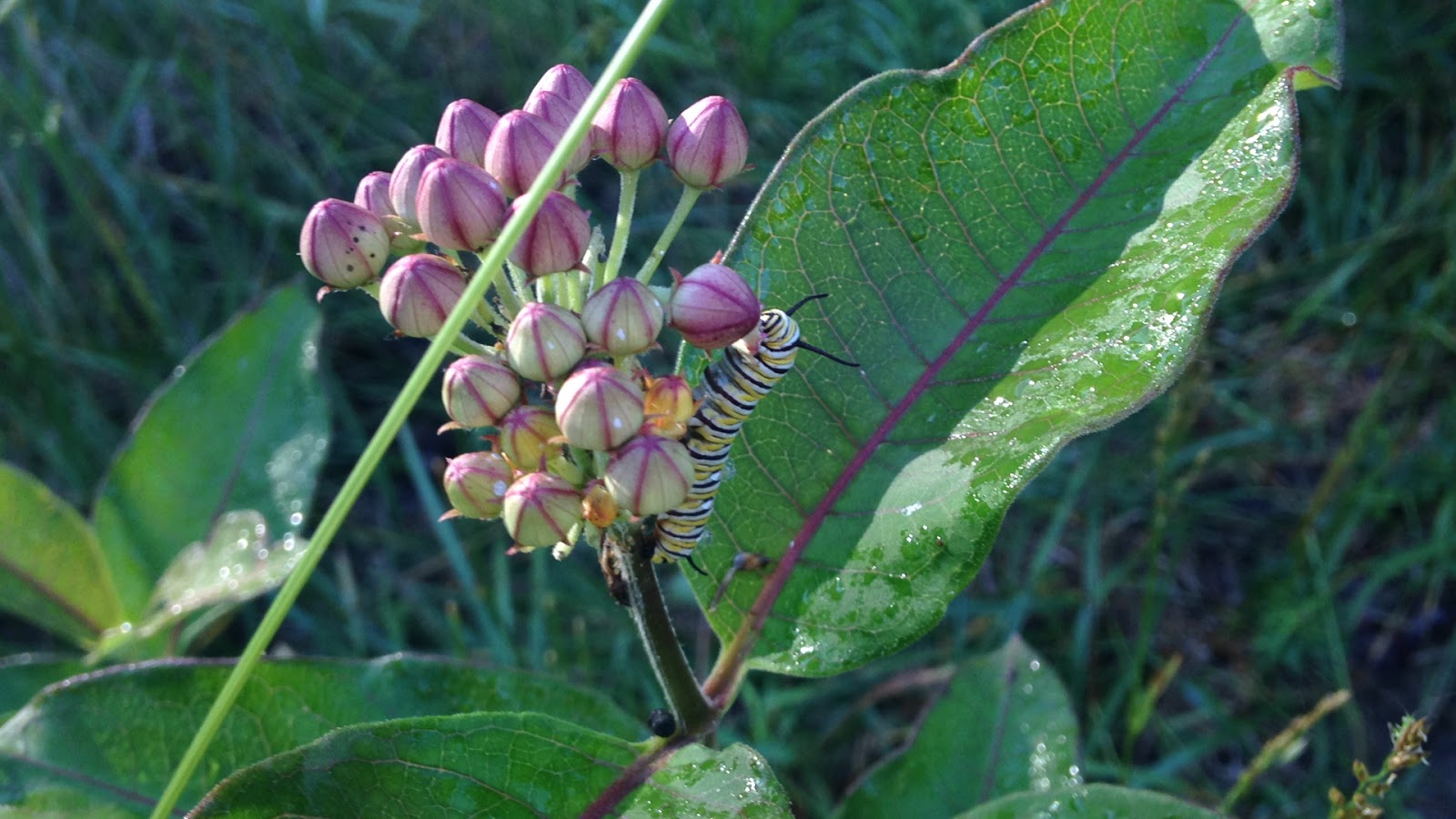
Monarch caterpillars are famous for their exclusive diet of milkweed leaves. They consume the foliage and sequester the plant’s toxic cardiac glycosides for their own defense. This makes the Monarch a superstar in the eyes of conservationists and gardeners — but from the milkweed’s perspective, it’s a heavy consumer.
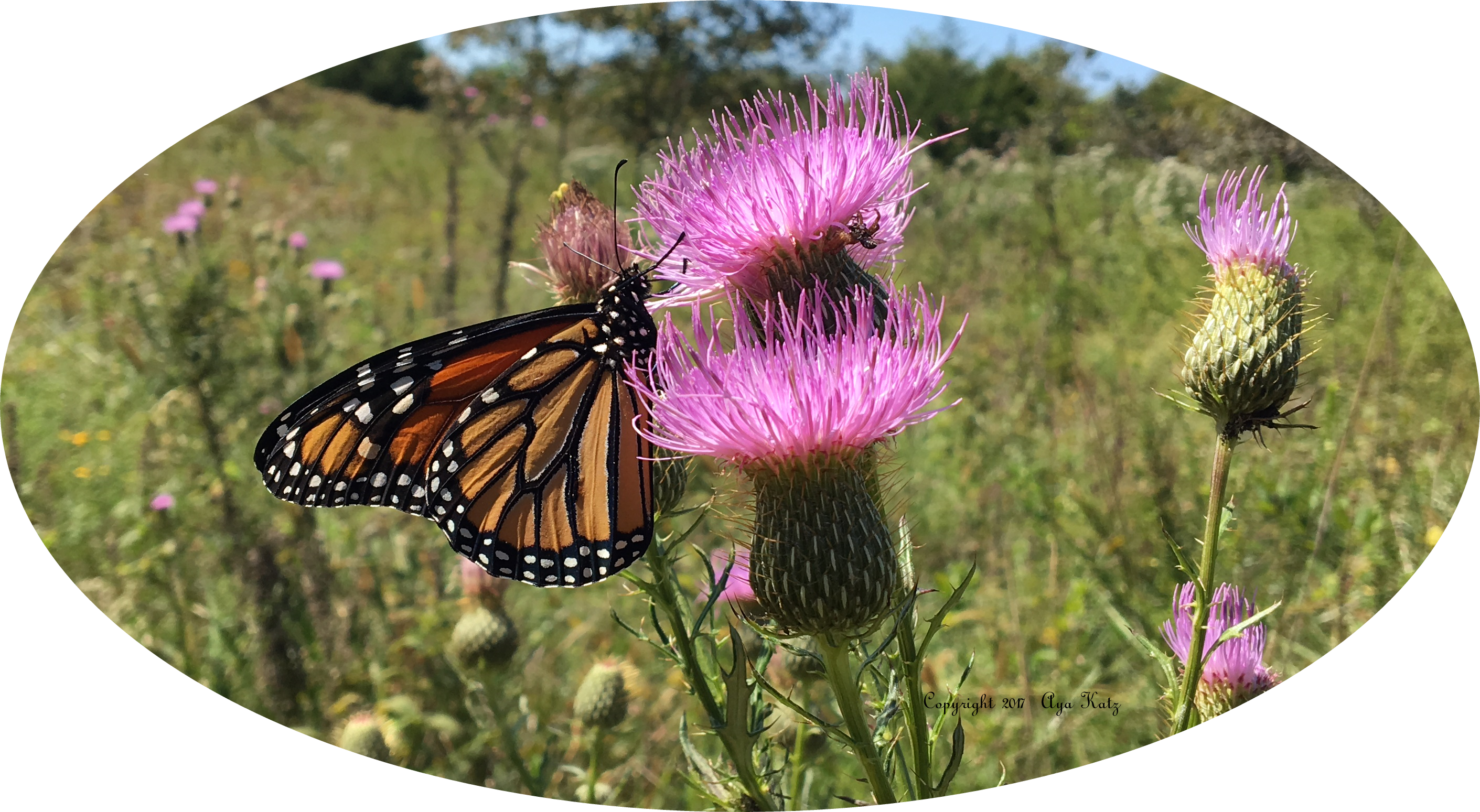
Adult Monarchs do visit flowers for nectar (as seen in my older post on thistle), but they are not efficient pollinators of milkweed. The plant’s pollen comes in specialized sacs called pollinia that need to be extracted and inserted precisely — a task better suited to stronger, more robust insects.
According to Cornell ecologist Anurag Agrawal, author of Monarchs and Milkweed, Monarchs, even when they do enjoy the nectar of a milkweed, do not help to pollinate it. They are not equipped to extract the pollen from the pollinia.
The Great Spangled Fritillary: The Better Pollinator
Caption: Great Spangled Fritillary on milkweed. These butterflies provide a more balanced relationship with the plant.
As I noted in the thistle post, I observed many Great Spangled Fritillaries on milkweed, but never an adult Monarch on its “signature” plant’s flowers. Unlike Monarch caterpillars, Fritillary larvae feed on violets, not milkweed. When the adults visit milkweed, it’s purely for nectar — and their larger size and stronger legs make them much more effective at transferring pollinia. The US Forest Service recognizes Fritillaries as genuine milkweed pollinators. The Great Spangled Fritillary not only has a better opportunity to nectar on the milkweed due to timing of the blooming season with their nectar thirst, but also has the physical capability to extract and to spread the pollen.
This creates a win-win: the fritillary gets food, and the milkweed gets genuine help with reproduction.
Two Ways to Reproduce: By the Seed and By the Rhizome
Of course, like many plants, the milkweed has two ways to reproduce:
1) Through the seeds, for which pollination is used for the purpose of sexual reproduction, fostering genetic variation and hardiness.
2) Through the roots, which is an asexual form of reproduction, spreading genetically identical plants.
It is said that when a milkweed plant is disrupted by browsing animals — elk and deer, for instance — then it spreads more through the rhizome. It may be that by munching on the milkweed plant, the Monarch caterpillar is encouraging the plant to spread through its roots.
However, pollination helps to propagate milkweed far and wide, whereas spread by rhizome is merely local. Seed dispersal via pollination colonizes new territory entirely, crossing barriers that rhizomes never could: roads, rivers, open fields, new habitats.
The Monarch is using the milkweed, without helping to propagate the very plant it depends on for its existence. The Fritillary, on the other hand, contributes to the milkweed’s reproductive success, genetic diversity and range expansion. One is a parasite, while the other gives as good as it gets.
A Tale of Two Butterflies
The Monarch brings the fame and inspires milkweed planting, which is wonderful. But as my own observations (and photos) show, the story is more nuanced. Milkweed thrives thanks to a diverse pollinator community — including the hardworking Great Spangled Fritillary. The Monarch, from the point of view of the milkweed, is merely a pest.
Gardening Tip:
Plant violets for the Fritillaries, and don’t try to weed out thistles that provide nectar when milkweed flowers are scarce. Monarchs are beautiful, and they depend on milkweed for their caterpillars to munch on. Despite the destruction caused by the caterpillars, don’t worry about planting new milkweed — as long as there are Great Spangled Fritillaries, they will help the milkweed to spread!

