
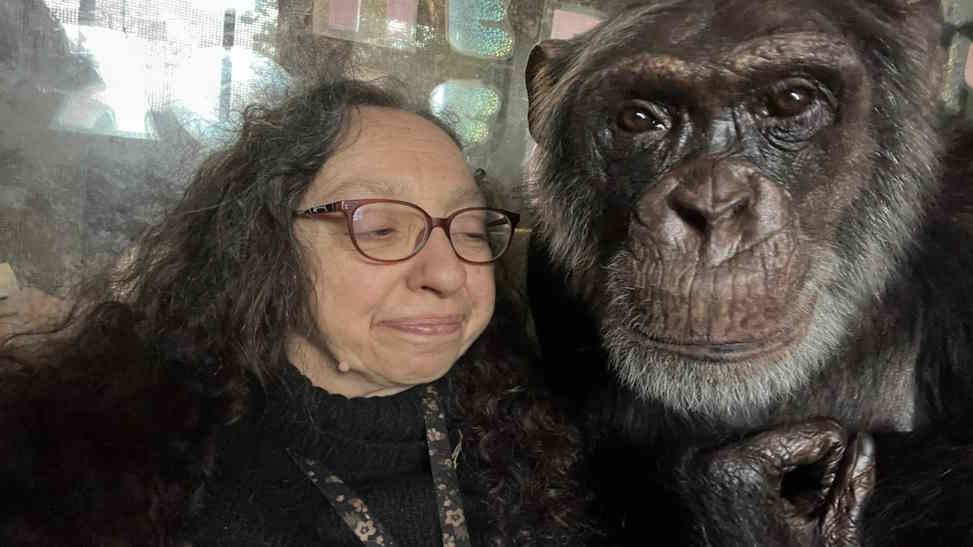
His name is Bow. He is a male chimpanzee, now in his mid-twenties, who has lived his entire life as the subject of a language acquisition study on a small farm in Missouri. He was never taught to use symbols on a keyboard or point to pictures on a board. Instead, he learned to read and spell — in both English and Hebrew — by pointing at letters on a laminated sheet.
That’s not the remarkable part.
The remarkable part is that we can prove he does it independently. Not by training. Not by cue. Not by reading subtle signals from the humans around him. We can prove it the same way courts prove facts and the same way historical linguists reconstruct languages no one has spoken in three thousand years: by eliminating every other reasonable explanation.
Here is the evidence that is already in the record, regardless of what happens next:
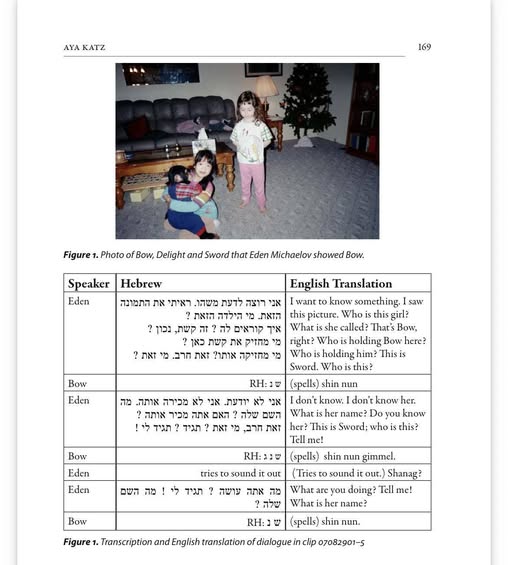
Bow has spelled out information his conversation partner did not know. There is no way to unconsciously prompt someone toward information you don’t have. If the human in the room doesn’t know the answer, the human cannot be leaking the answer — not through body language, not through tone of voice, not through any of the “Clever Hans” mechanisms skeptics rightly demand we rule out.
Bow has spelled in Hebrew when his conversation partner was not a Hebrew speaker and no Hebrew speaker was present. He did not switch to English for their convenience. He used the language he chose, with a person who could not have guided him toward it.
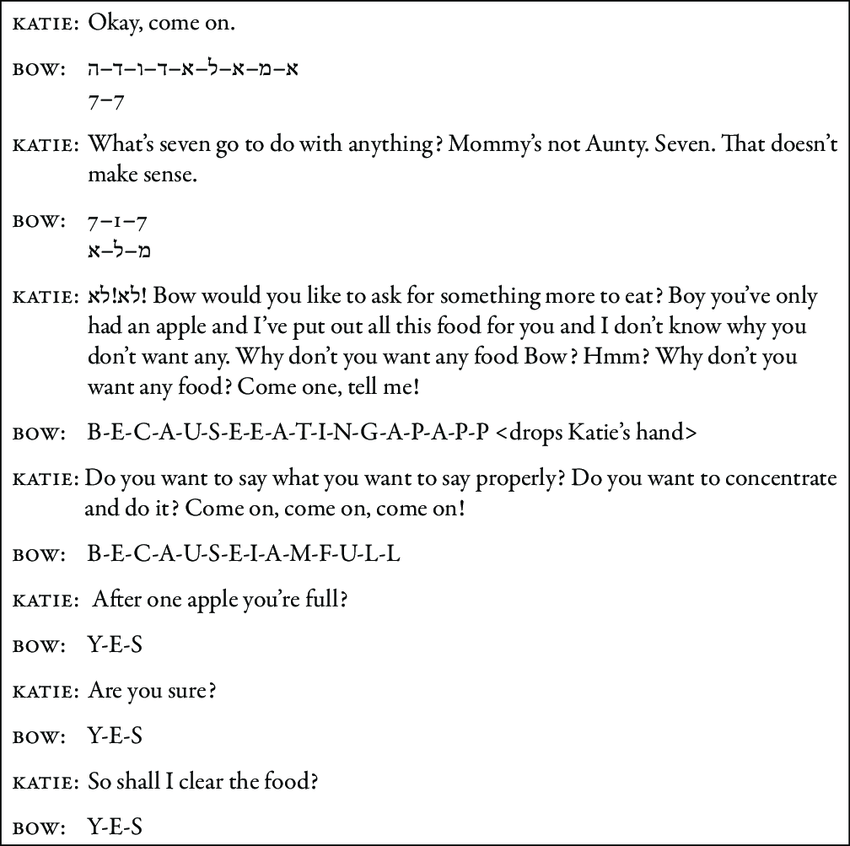
Here’s how precise that conclusion can be. In one of the two clips above, Bow is shown a photo of a Chinese family friend and asked her name — by a researcher who had never heard that name and did not speak Chinese. Bow spelled three Hebrew consonants that closely match the actual phonetic sounds in her Chinese name.
Some will say: we need more studies. We need replication. We need a larger sample.
To which the answer is: by that standard, Emily Brontë is not a novelist. She only wrote one book. Shakespeare’s authorship cannot be established because he left no signed manuscripts. Rasmus Rask and the Brothers Grimm cannot be called linguists because they did not publish continuously throughout their careers.
We do not demand that a body of evidence keep expanding forever before we accept what it already shows. The record of Bow’s literacy exists. It has been documented, analyzed, and published. The question of whether he independently spelled words has been answered. The answer is yes.
Future research may tell us more about how he thinks, what he understands, how deep the language goes. But the core question — did he do it on his own — is no longer open.
Read the Scholarly article: Standards of Proof in Ape Language Studies: The Case of Bow and Literacy

