
America has never had a true national ID card, and for good reason: the idea has always smacked of European-style centralized control. When Social Security began in 1936, the card carried the explicit disclaimer: “NOT FOR IDENTIFICATION.” Lawmakers and the public feared it would become a universal tracker, violating privacy and state sovereignty. That line stayed on cards for decades (until 1972) precisely because Congress rejected the SSN as a de facto national identifier.
The Privacy Act of 1974 reinforced this: it limited how government could use personal data, and multiple commissions (1970s–1980s) shot down national ID proposals. Presidents from Carter to Reagan explicitly opposed it. The fear was surveillance, discrimination, and turning citizens into subjects who must “show papers” to prove their existence.
That resistance faded—not because the concerns vanished, but because “practical” needs crept in. The 1986 immigration law started requiring SSN for work verification. Post-9/11, the REAL ID Act (2005) standardized state driver’s licenses for federal use (airports, buildings), creating what critics called a backdoor national ID. States rebelled—Maine, Montana, Utah, and others passed resolutions or laws refusing compliance, citing privacy, costs, and Tenth Amendment violations. Deadlines slipped for years, but enforcement is now rolling out (full by 2027).
The SAVE Act revives those fears. It requires proof like passport or birth certificate for federal voter registration. But here’s the catch: no document proves citizenship alone. Every birth certificate relies on a hospital swearing the birth happened. Passports require sworn applications and supporting docs. Naturalization certificates follow an oath of allegiance. Documents are convenient proxies, but the foundation is always sworn testimony—same as the current voter registration oath (“under penalty of perjury, I am a citizen”).
So the Act doesn’t eliminate oaths; it piles expensive barriers on top ($165+ passport, lost records, name changes after marriage). It risks disenfranchising eligible citizens while only marginally deterring fraud (forgers exist). If the goal is accountability, why not tie federal votes to federal tax contributions? Less bureaucracy, more skin in the game.
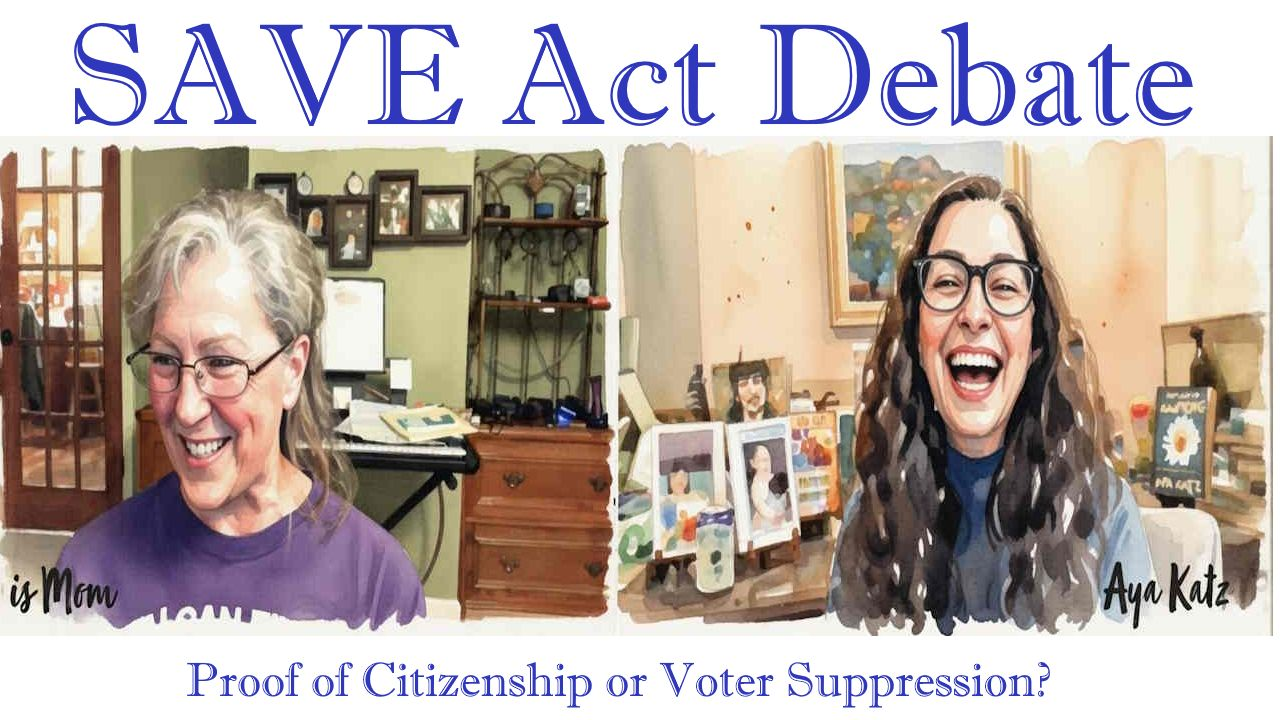
I debated this with Kathy Freeze: she worries about close races (2000 Florida’s 537 votes) and non-citizen voting in sanctuary areas. We covered multiple sides—watch the full discussion here:
Federal ID has always been anti-American because it shifts power from citizens to bureaucrats. The SAVE Act continues that trend—more proof, more control, same old risks. What do you think: Is citizenship proof needed, or just another wall? Comment below, share, and subscribe for more on rights and government overreach.
Related:
Subscribe to My Podcast: The Walls Have No Ears

